Corporate Lunch Buyers: Connect Your Workplace With Local Food Hubs
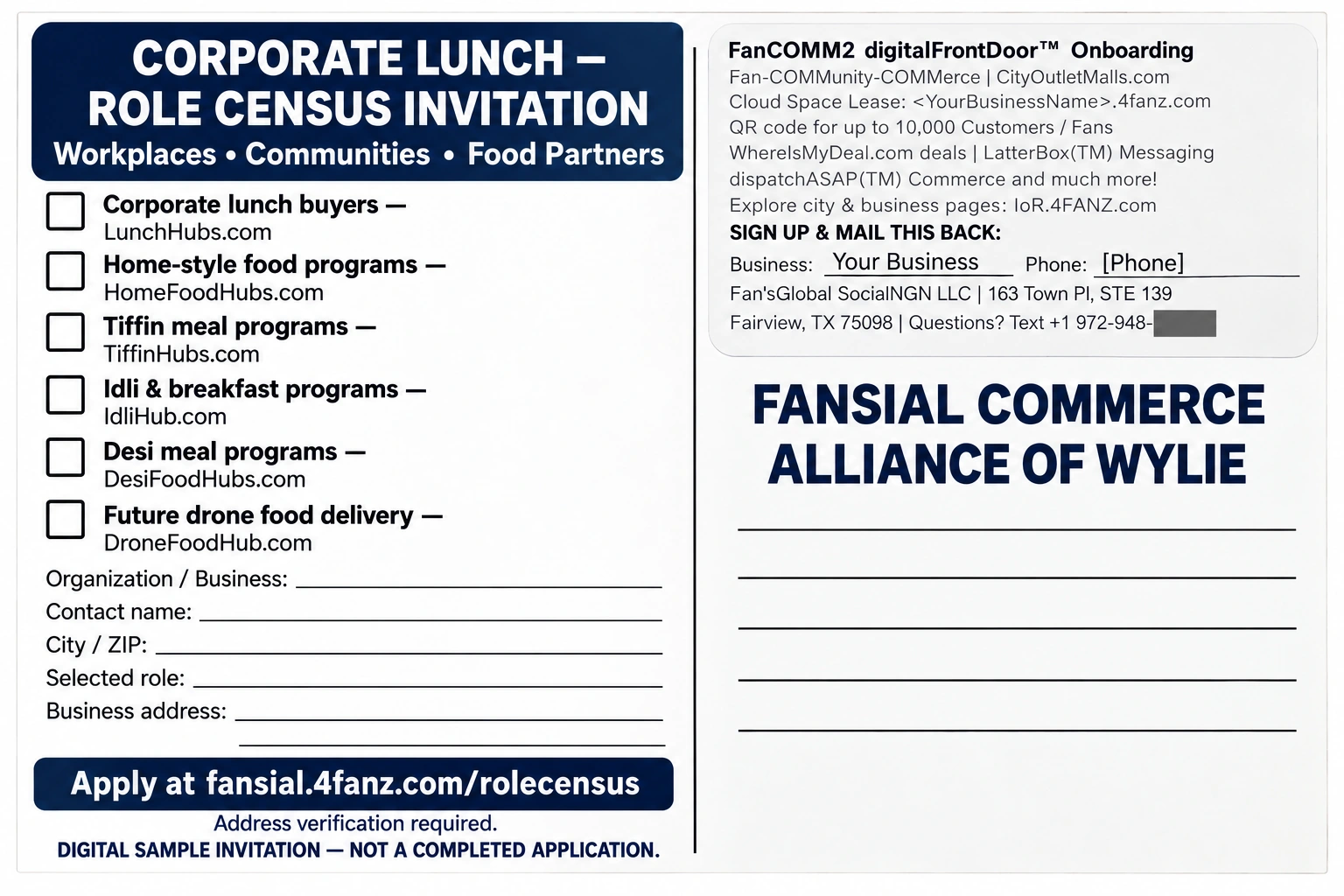
Digitally created sample invitation for corporate lunch buyers, workplace coordinators, community organizers, and food partners. The left side offers six role and ecosystem options; the right side retains our onboarding format. This is not a completed application or evidence of an existing food-service agreement.
An office lunch coordinator needs more than another restaurant advertisement. They need a clear way to explore relevant food providers, communicate requirements, and understand which arrangements fit their workplace.
FANSIAL® Commerce Alliance invites corporate lunch buyers and local food partners to begin with RoleCensus: identify your role, your city, and the meal program you want to explore. Powered by FanCOMM2™, the concept connects workplace demand with participating food businesses through organized local hubs.
Six Entry Points for Lunch and Meal Programs
- LunchHubs.com — Corporate lunch buyers: A proposed meeting point for workplace administrators, HR teams, procurement contacts, office managers, and participating lunch providers.
- HomeFoodHubs.com — Home-style food programs: Explore participating providers offering home-style menus and community meal arrangements, subject to their operating permissions and service areas.
- TiffinHubs.com — Tiffin meal programs: Introduce recurring meal options, menus, schedules, and provider contact pathways for people interested in tiffin services.
- IdliHub.com — Idli and breakfast programs: Organize discovery around idli, breakfast specialties, workplace breakfast interest, and relevant food providers.
- DesiFoodHubs.com — Desi meal programs: Connect interest in Desi meals with participating restaurants, caterers, and other eligible providers.
- DroneFoodHub.com — Future drone food delivery: An ecosystem concept for future delivery partnerships. Drone delivery depends on authorized operators, local permissions, infrastructure, and service availability; selecting this option does not book a delivery or mean the service is live.
These are ecosystem destinations and intended use cases. Available services depend on participating providers, deployment, location, and applicable operating requirements.
Who Should Participate?
Corporate and Workplace Lunch Buyers
Office managers, HR teams, employee-experience coordinators, facilities teams, procurement contacts, and company event organizers can identify their workplace and describe the meal programs they wish to explore.
Useful details include location, approximate meal count, preferred days, budget range, delivery or pickup arrangements, and dietary requirements. Share only the information needed for a provider conversation; an employee directory is not a marketing list.
Community Coordinators
Apartment community offices, shared-workspace operators, and other coordinators can explore relevant meal programs for their communities. Participation remains voluntary, and administrators decide which opportunities suit their members.
Restaurants, Caterers, and Food Partners
Participating providers can present menus, service areas, availability, ordering contacts, capacity, and relevant offers through their digitalFrontDoor™. Providers remain responsible for food preparation, ingredient and allergen information, permissions, pricing, and fulfillment terms.
From Scattered Messages to a Clear Local Conversation
A buyer can identify a city and meal-program interest, explore participating providers, and discuss requirements through the available contact channels. A provider can explain its menu, minimum order, timing, and service arrangements in a consistent destination.
The goal is useful discovery and continuing relationships. Enrollment does not guarantee a supplier match, corporate contract, order volume, food delivery, or employee participation.
What a Workplace Should Ask a Provider
- Which menus, meal types, and dietary options are available?
- How are ingredients, allergens, and food-handling questions addressed?
- What are the minimum order, price, payment terms, and cancellation arrangements?
- Which locations and delivery or pickup windows are supported?
- Who handles changes, missed orders, and service inquiries?
Confirm these details directly with the provider before making arrangements. A sample invitation is not an order or a catering contract.
Your Chamber of Fan–Community–Commerce
FANSIAL® Commerce Alliance connects participating organizations through city and industry roles. Eligible plans and local programs can support discovery, opted-in communication, shared promotions, sponsorship opportunities, and community relationships.
Our goal is to keep basic membership affordable so you can collaborate locally with guidance from our Marketing team. Every city is different; meal programs develop according to local needs and participation.
Explore alliance benefits, read why businesses join, and review membership plans. A workplace’s role and selected plan determine the relevant onboarding path; buying meals does not automatically require becoming a restaurant sponsor.
Start With Your Role and Location
Choose the option that fits your organization on the sample card, enter your contact and location details, and begin through RoleCensus. You can explain whether you are a lunch buyer, a community coordinator, or a food provider during onboarding.
Address Verification is a must. Return the completed postcard sent to your business location to complete the required verification steps. Payment alone does not complete onboarding or activate all secure membership features.
Sign up through RoleCensus · Explore your city’s alliance · Contact Us
If local promotions are available, explore WhereIsMyDeal.com. Offers are subject to each participating business’s terms.
Your workplace. Your meal program. Your local food community.
Join the FANSIAL® Commerce Alliance of your city
Address Verification is a must. Return your completed postcard to access all secure membership features.