From Paper Referral Cards to Oasis Smart-Card Referrals
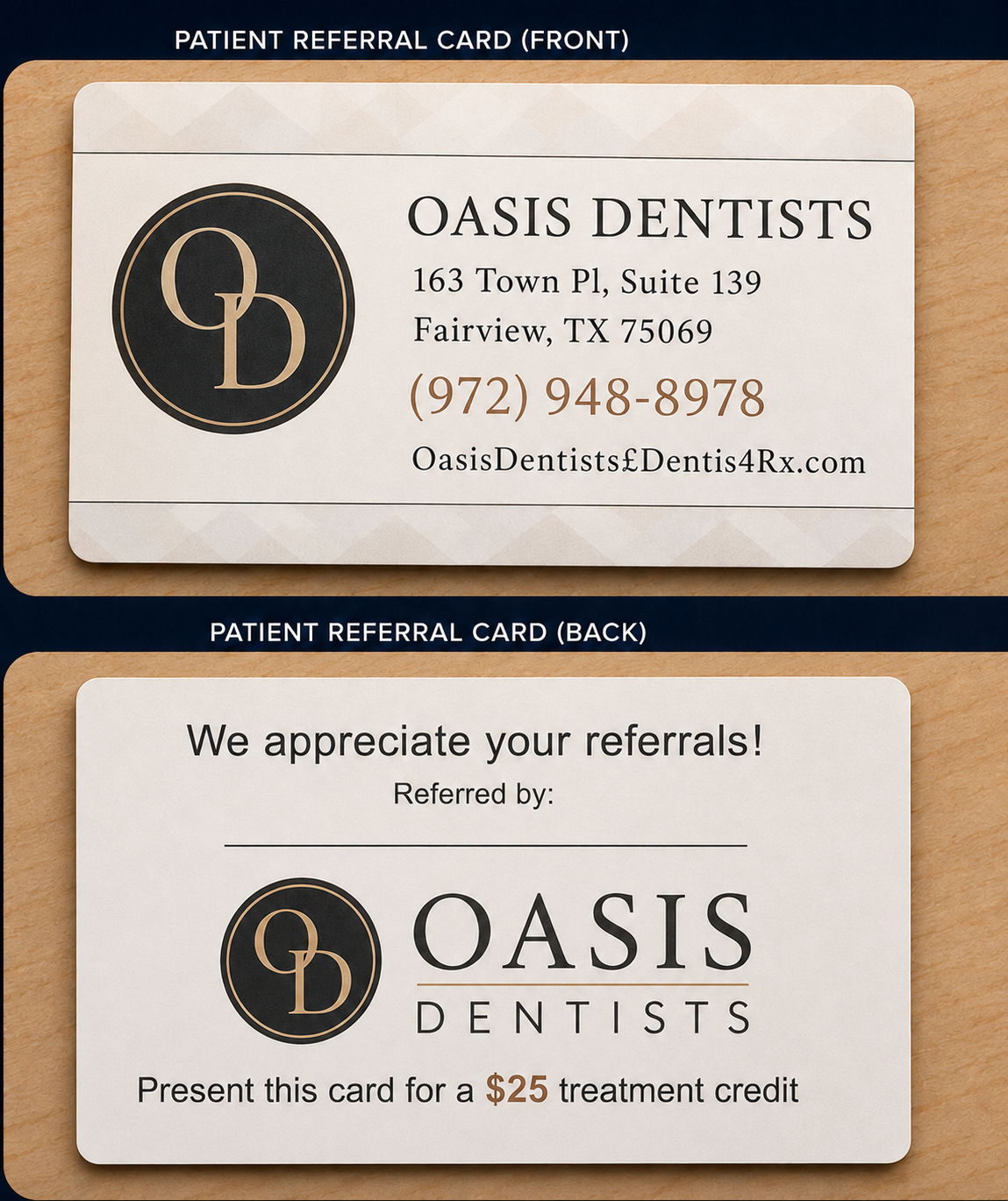
Traditional referral cards are familiar: a practice gives a customer a printed card, the customer hands it to someone else, and the business tries to work out where the introduction came from. The process can be personal and effective, but the card has no live status, no approval history, and no clear route for questions.
Fansial Oasis Smart Cards bring the relationship into a structured digital context. A business can present its identity, role, location, official contact path, and its LatterBox route in one place. A prospective connector can see the published program, request approval, and keep the referral conversation connected to the right business identity.
Traditional referral cards still have a place
Printed cards can work well for local events, reception desks, and face-to-face introductions. They are simple and tangible. Their limits appear after the handoff:
- The business may not know which card or person initiated the referral.
- The person making the introduction may not know whether a program is active.
- Terms, eligibility, and timing can be unclear or outdated.
- A question often turns into an unstructured phone call, email chain, or social-media message.
An Oasis Smart Card does not erase the value of an in-person referral. It gives the referral a durable, verified next step.
One card, one verified business context
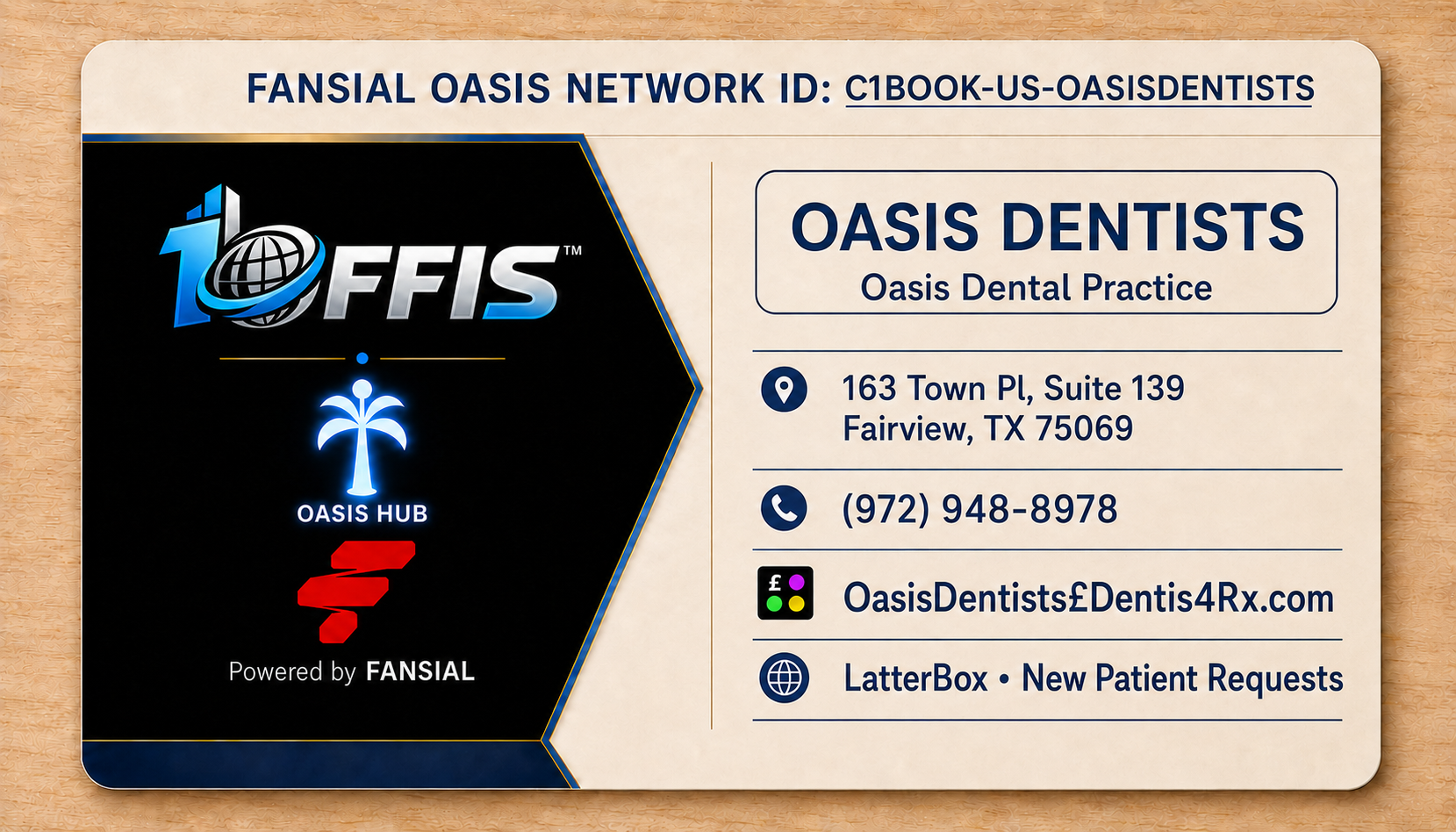
An Oasis Smart Card can show a business handle, role, location, official phone or web path, and a LatterBox destination. The business decides what information is public and which contact details are shown.
For the person receiving the card, this reduces ambiguity: they can identify the correct business and choose the right route to ask a question, make an inquiry, or request referral-program approval.
Referral programs are opt-in and approval-based
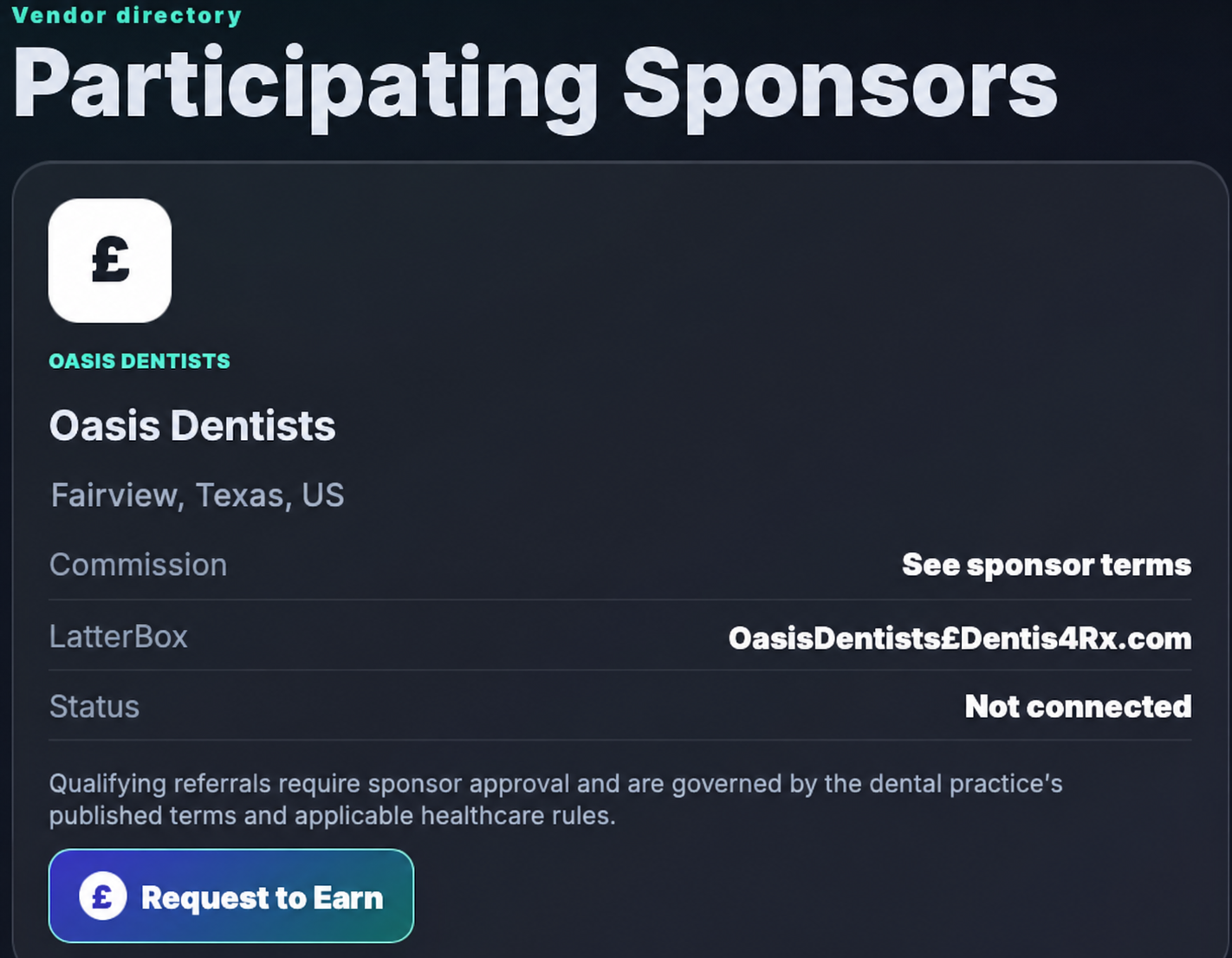
The referral workflow is deliberately not an automatic commission promise. A participating sponsor publishes its own terms, decides who may participate, and reviews connection requests. Until the sponsor approves the relationship, the status remains Not connected or Approval pending.
This keeps the system fairer for both parties:
- Businesses retain control over their program and terms.
- Participants can see that approval is required before promoting an offer.
- Referral activity can be tied to the relevant Oasis business identity rather than a vague social post.
- The business can pause a program or update its published terms when needed.
LatterBox turns interest into a clear request
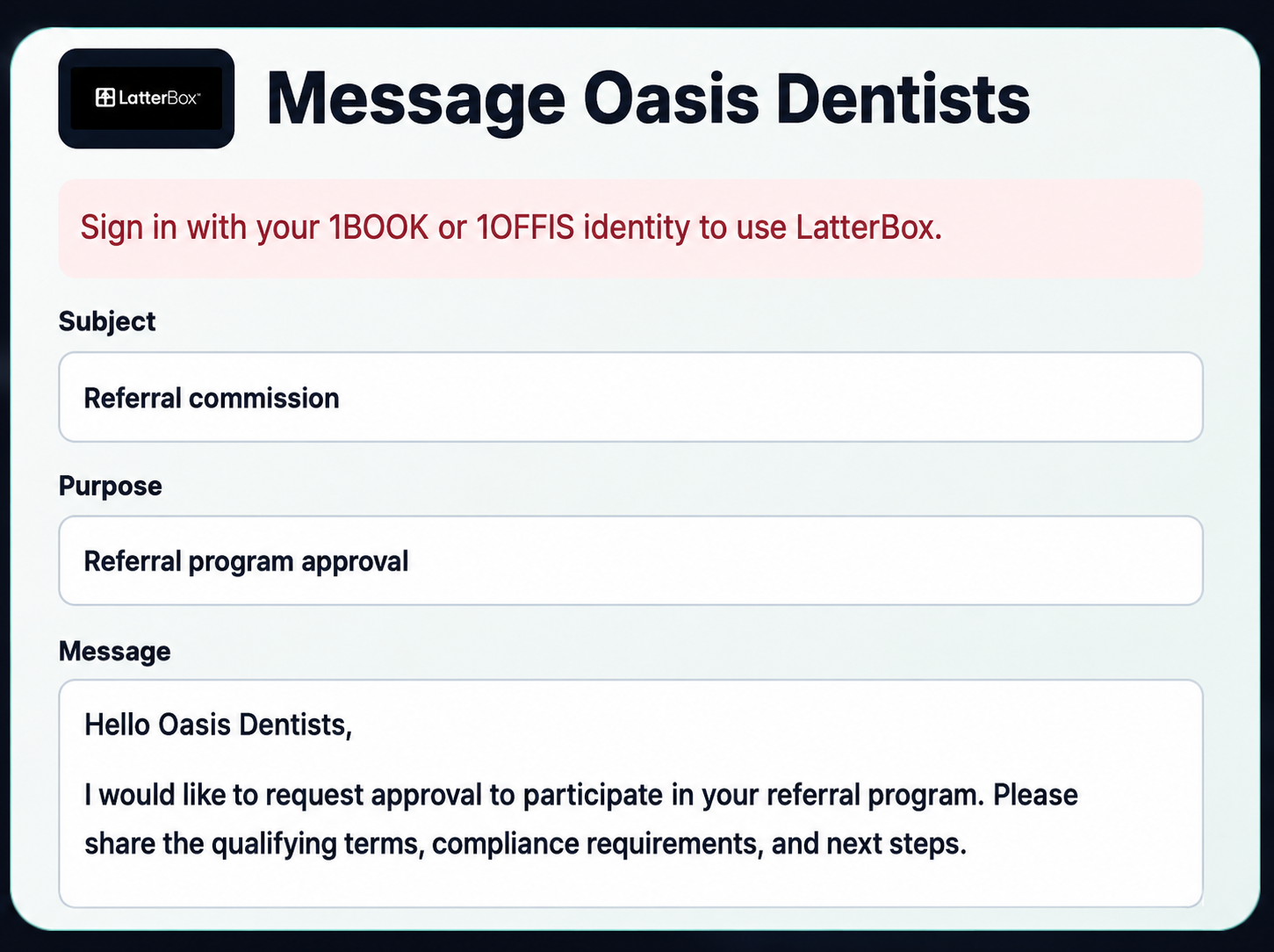
LatterBox gives the initial request a structured subject and purpose. Instead of a generic direct message, the sender can ask for Referral commission approval and invite the business to share qualifying terms, compliance conditions, and next steps.
That context helps the receiving business route the request to the appropriate owner, coordinator, or authorized team member. It also gives the participant a clear record of what they requested and why.
Commission is never assumed
Referral rewards, commissions, credits, and incentives vary by business, jurisdiction, and profession. Some industries have strict licensing, fee-splitting, advertising, privacy, or anti-kickback rules. A Fansial Oasis Hub can organize a request and show a sponsor's published terms; it cannot determine whether a particular referral payment is lawful or appropriate.
Before activating a referral reward, sponsors should define and review:
- Who is eligible to participate.
- Which introductions qualify.
- What proof or registration is required.
- How duplicate leads are handled.
- What event makes a reward payable.
- Any professional, tax, privacy, licensing, or disclosure requirements.
Healthcare and dental organizations in particular should obtain qualified legal and compliance review before offering any patient-referral compensation. LatterBox is for general business communication, not for protected health information or regulated transactions.
The practical difference
A paper card can start a conversation. An Oasis Smart Card can give that conversation a verified identity, a clear request path, published terms, and an approval record.
The goal is not to turn every relationship into a commission. It is to make legitimate introductions, approved offers, and community sponsorships easier to understand and manage—while keeping the business in control.
Explore the participating sponsors directory to see which programs are available, or join Oasis to create a verified presence for your own business.