Do You Know Who Your Best Customers Are?
The ones who already chose you.
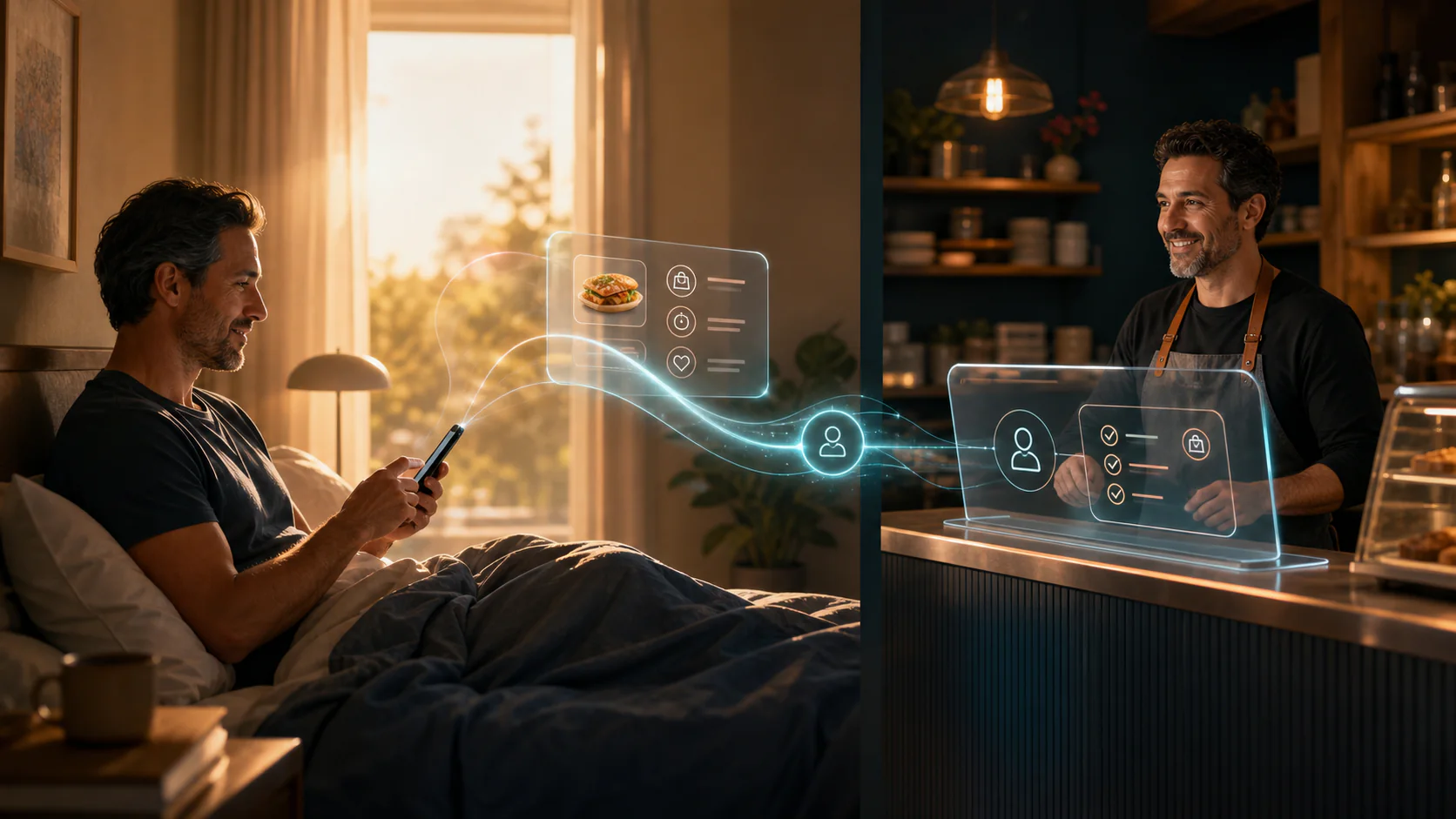
Your best customers may not be strangers waiting to discover you.
They may be the people who have already visited your restaurant, bought from your store, booked your service, attended your event, or recommended you to someone else.
They already know what you offer. They have already trusted you once. Some of them already have your phone number, email address, website, or contact form.
But after the transaction ends, are they still meaningfully connected to your business?
The relationship often stops at the door
Think about a customer leaving your restaurant after a good meal.
You may know what they ordered. They may remember the experience. But your business often has no simple, respectful mechanism to hear:
- What did they really think?
- What would make the experience better?
- Would they recommend you?
- When might they visit again?
- What would make it easy for them to order next time?
The customer leaves, and the relationship becomes uncertain. The business waits for another visit while the customer returns to a crowded digital world.
“They follow us on social media” is not the same as being connected
You may think the relationship continues because the customer follows your business on Facebook, Instagram, TikTok, or another social network. Some businesses also maintain WhatsApp groups.
Those channels can be useful, but they are mostly publishing environments. Your message enters a feed, group, or notification stream alongside family updates, entertainment, breaking news, advertisements, and hundreds of other distractions.
The platform’s algorithm may decide whether your followers see your post. Your customer’s own priorities decide whether they notice it. A follower count does not guarantee that your best customers can hear you—or that you can hear them.
The problem is not that social media has no value. The problem is expecting a crowded attention platform to behave like a direct customer relationship.
The Saturday-morning test
Here is a practical question:
A customer wakes up on Saturday morning and wants something from your business. Can they order from bed and collect it twenty minutes later—without searching through old posts, guessing who to message, or starting the relationship again?
That moment is where convenience becomes loyalty.
The customer does not need another feed. They need a familiar doorway back to your business.
Give your fans a digitalFrontDesk™
A digitalFrontDesk™ is intended to provide that doorway.
It gives a customer—or Fan—a personal cloud office where the relationship can continue beyond the original visit. Instead of depending entirely on public posts and unpredictable reach, the Fan can retain a structured connection to the businesses and Oasis Fan Groups they choose.
From that front desk, the Fan can have a clearer path to:
- Receive relevant invitations and updates
- Send or receive contextual LatterBox™ messages
- Return to participating businesses
- Follow requests, referrals, orders, and responses
- Stay connected without exposing private relationships publicly
- Decide which businesses and communities remain part of their personal network
For the business, this creates the possibility of a durable return path. For the customer, it creates convenience and control.
A Fan Pass should feel like a gift
When a sponsor invites a customer, the customer can receive a complimentary Fan Pass to Fansial’s digitalFrontDesk™.
That invitation should not feel like a demand to join another social network. It should feel like a useful premium benefit:
Here is your personal cloud office. Use it to stay connected, communicate privately, and return when you are ready.
The Fan chooses whether to accept. The relationship is not based on silently harvesting attention. It begins with an invitation and continues by choice.
Many platforms offer tools. Who gives the customer an office?
The internet is full of platforms that each do something slightly different.
One offers email marketing. Another provides loyalty points. Another manages online ordering, customer reviews, text messages, social posts, coupons, reservations, or support tickets. These tools may help the business, but they usually leave the customer moving between disconnected inboxes, apps, links, feeds, and forms.
Very few begin with a more personal question:
Where is the customer’s own cloud office?
The digitalFrontDesk™ is designed around that missing space. It belongs to the Fan—not to a public feed—and becomes the place from which the Fan can manage accepted business relationships, messages, requests, offers, referrals, and orders.
The sponsor makes that office available by sending a complimentary Fan Pass invitation. Access that could otherwise require a paid subscription is sponsored for the invited Fan, making the invitation a tangible customer benefit rather than another request for attention.
This changes the relationship:
- The sponsor gives the Fan a useful personal cloud office.
- The Fan decides whether to accept and remain connected.
- The sponsor can share relevant deals within that accepted relationship.
- The Fan can respond privately instead of commenting in a public feed.
- When the Fan is ready to buy, a structured request or order can be sent through dispatchASAP™.
The sponsor is no longer merely broadcasting promotions and hoping an algorithm delivers them. The business has helped create a direct, permission-based route through which the customer can return and act.
From a deal to an actionable order
A deal is valuable only when the customer has a convenient way to act on it.
Suppose the restaurant shares a Saturday breakfast offer with its connected Fans. A customer sees the deal from their digitalFrontDesk™, chooses what they want, and sends the order through dispatchASAP™. The request retains its business and customer context, so it can be routed to the appropriate participating business workflow.
That is different from posting a promotion and waiting for likes. It connects the offer to an intentional customer action.
What changes for the business?
The business no longer has to treat every visit as an isolated transaction.
A good experience can become the beginning of an ongoing relationship. Feedback can have a route back. A future offer can reach a context the customer deliberately accepted. A Saturday-morning intention can become a direct request instead of a forgotten thought.
The objective is not to replace every phone call, email, website, or social account. It is to connect those scattered touchpoints to a more structured front door.
Experience it before you offer it
Before deciding whether your customers need a digitalFrontDesk™, experience one yourself.
Join, explore how the Fan Pass works, see how identities and private connections are organized, and decide whether it creates a better return path for the people who already value your business.
You can quit at any time.
But first ask yourself:
If your best customer wants to return twenty minutes from now, have you made it easy for them?